The Best Food Log App in 2026 (Without the 10-Minute-Per-Meal Tax)
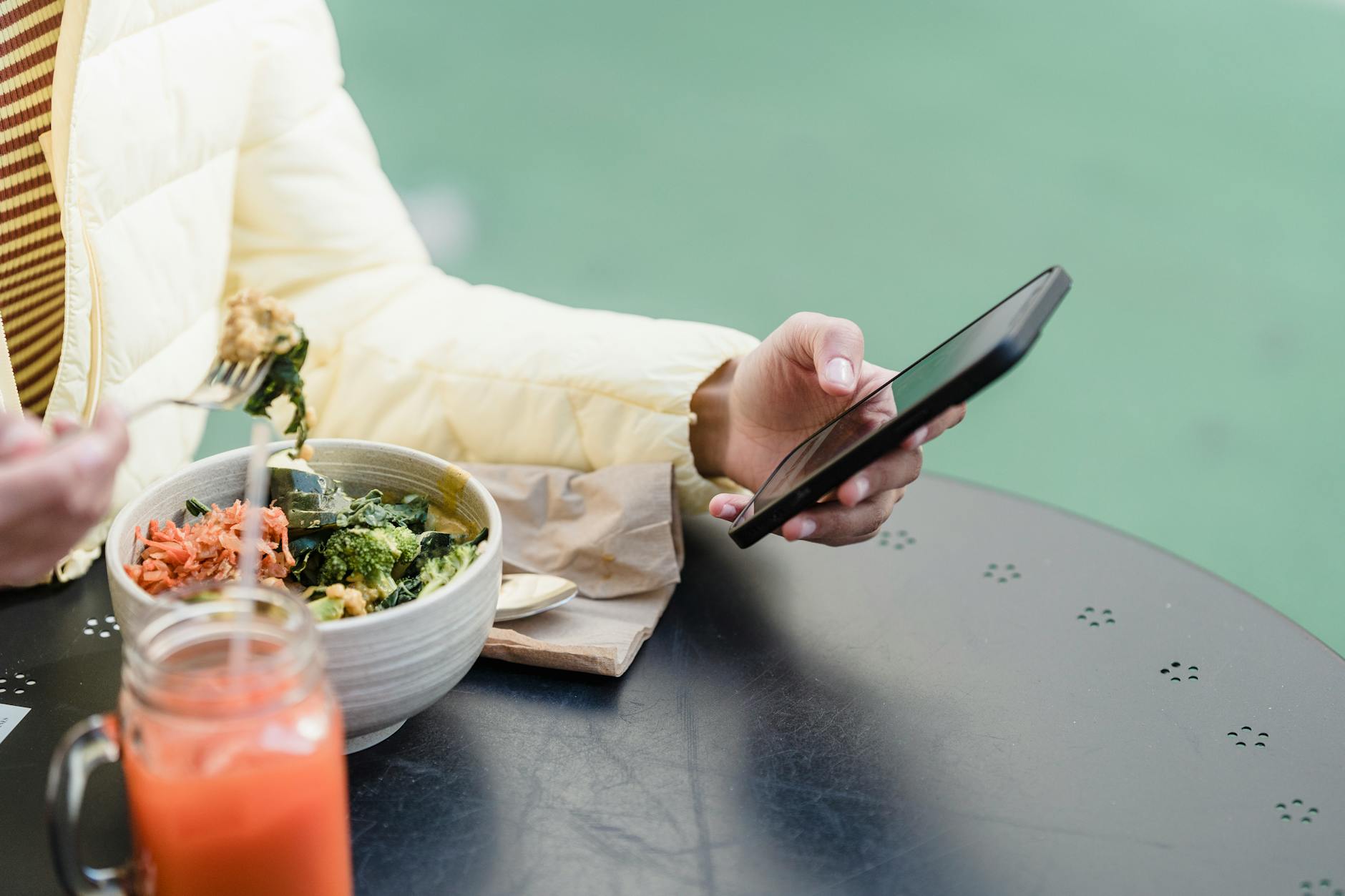
Here is how a food log used to go: open the app, tap "add food," type "chicken sandwich," scroll past 47 results, pick the one with the most stars, edit the portion to "actually it was more like 1.3 of these," save, and now repeat for the chips and the apple. By the time you've logged lunch, lunch is cold.
That is the 2014 workflow, and it is the reason almost no one keeps a food log past day ten. The good news: a 2026 food log app should not work like that. The bar is higher now, the AI is finally good enough, and there is no reason a sandwich should take three minutes to log.
What a Food Log App Should Actually Do in 2026
If a food log app cannot pass this checklist, it is wasting your time. Most cannot.
1. Capture a Meal in Under 10 Seconds
Photo, voice, text, or barcode. Pick the one that fits the moment. Eating out? Snap the plate. Driving? "Log a small grilled chicken wrap and a Coke." Packaged food? Scan the barcode. You should never sit there typing a brand name and scrolling through 47 database matches. That step is the entire reason food logs die.
2. Read 50+ Nutrients, Not Just Calories
A food log that only tells you calories is the nutritional equivalent of a fuel gauge with no oil pressure, no engine temperature, no tire pressure. You eat for protein, fiber, magnesium, B12, iron, omega-3, vitamin D, and dozens of others. A 2026 food log should surface all of it automatically off a single photo or voice note.
3. Show You the Pattern, Not Just the Day
One day of logging is useless. Thirty days of logging tells you that you average 47g of protein on weekends, that your fiber craters on travel days, and that your magnesium has been low for three weeks. The food log app should do that math, not make you scroll through 30 individual day-screens.
4. Stop Punishing You for Under-Eating
If you eat 1,400 calories on a stressful Tuesday, you do not need a red "you went under!" warning. Most food logs were built to police calorie deficits. In 2026, the question is "did you hit your protein and your micros?" not "did you fill your quota?" Same goes for skipped meals — life happens, a food log should record it without guilt-tripping.
5. Sync With Your Actual Health Data
Apple Health, Google Health Connect, smart scales, fitness trackers — the food log is one input among many. Your weight, sleep, and activity all matter to the picture. If the food log does not pull and push to your phone's health hub, it is an island, and islands lose to ecosystems.
The single biggest reason food logs fail is friction at capture. If logging a meal feels like a chore, you will quit. If logging a meal takes one photo, you will keep going for months.
Why the Big Names Still Feel Like 2014
The legacy food log apps had a decade to fix capture friction. They did not.
- MyFitnessPal still puts you through database search, portion editing, and ad popups. It has the biggest food database in the world and the slowest workflow because of it.
- Lose It! is better at barcode scanning but still treats "calories" as the headline number. Micros are buried two screens deep.
- Noom is not really a food log — it is a behavior change program with a log bolted on. Logging is intentionally tedious because the curriculum thinks slowing you down builds awareness. Maybe true. Definitely annoying.
- Cronometer nails the nutrients (it tracks more micros than most), but the interface still assumes you enjoy data entry. If you do, it is great. If you do not, you will be back to using nothing within a week.
What HealthyOne Does Differently
HealthyOne was built around one premise: a food log should take less time than the meal. Everything else flows from that.
Four Capture Methods, Pick One
Photo, voice, text, or barcode. The AI handles the rest. Snap a plate of pasta and you get carbs, protein, fat, fiber, sodium, plus the 40-plus micros without typing a word. "Two slices of pepperoni pizza and a Sprite" works just as well. You never edit a database row.
50+ Nutrients on Day One
Every single meal gets analyzed for the full nutrient stack — not just macros, but vitamins, minerals, omega-3s, and the things that actually drive how you feel. Patterns surface automatically on a weekly dashboard.
Power Score, Not Calorie Score
Instead of a calorie deficit gauge, HealthyOne shows a Power Score — a single number that combines protein, micronutrient adequacy, and meal timing. Hit your protein and clean up two deficient micros and the number moves. It is harder to game than a calorie count and it rewards the behaviors that actually matter.
Heart Health Dashboard
Sodium, saturated fat, omega-3 ratio, and fiber roll up into a heart health view. If you have a family history of cardiac issues or you are on a GLP-1 (where heart health surveillance matters more, not less), this is the dashboard you check on Sundays.
Fasting Tracker and Squad
Intermittent fasting fans get a built-in fasting timer that talks to the food log — your last meal ends the eating window automatically. And if accountability helps you stick to anything, the Squad feature pairs you with a private group of other users who can see effort, not numbers.
Who Should Actually Use a Food Log
Real talk: not everyone needs a food log. If you eat the same five meals on rotation and you feel great, do not start one. But if any of these describe you, a fast food log will save you a lot of guessing:
- You are on a GLP-1 medication and need to confirm you are hitting protein on a smaller appetite.
- You suspect a nutrient is low — energy is off, hair is thinning, you bruise easily — and you want data before you start guessing supplements.
- You have a specific goal (cut, recomp, endurance event) and "eat clean" is not specific enough.
- You have tried MyFitnessPal three times and quit each time inside two weeks.
The Bottom Line
A food log app is only useful if you keep using it. The reason most people do not is friction, and the reason there is friction is that the major apps were built before phones could see food. In 2026 they can. The right food log lets you log a meal in one photo or one sentence, reads 50+ nutrients, and shows you the pattern across weeks instead of just the day.
Skip the database search. Skip the guilt-trip on under-eating days. Pick a food log that fits into your life instead of asking your life to fit into a spreadsheet.
The food log app that respects your time
Photo, voice, text, or barcode logging. 50+ nutrients per meal. Power Score, fasting tracker, heart health view, Squad accountability. 7-day free trial, then $7.99/month.
Try HealthyOne Free