GLP-1 Calorie Goal: How Many Calories Should You Eat on Ozempic or Mounjaro? (2026)
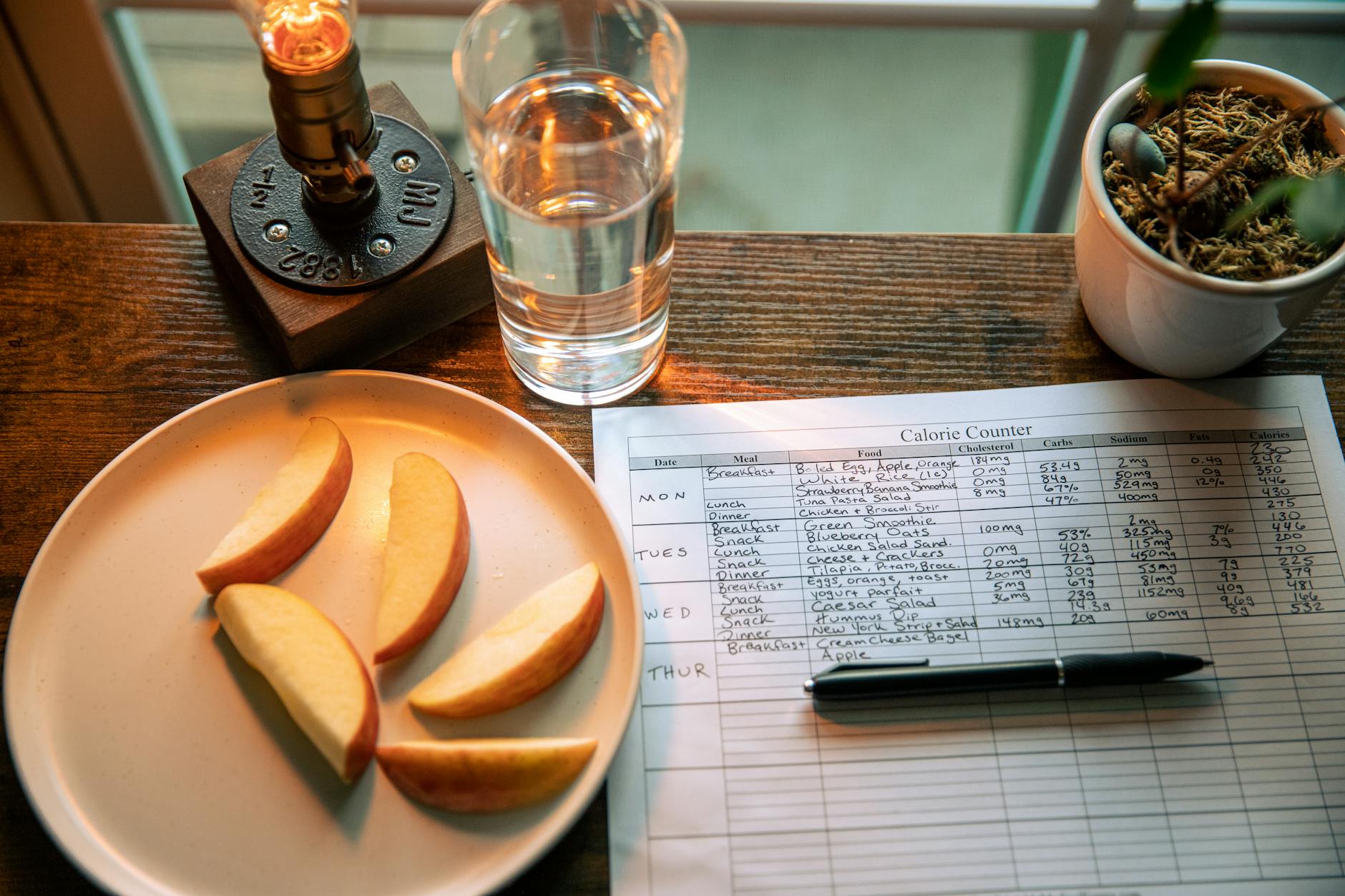
It's 8 p.m. You've had a protein shake, half a chicken thigh, and a handful of crackers all day. Your tracking app flashes a warning: you're 1,100 calories under goal. Eat more, it says. But you're on Wegovy, and the thought of another bite makes your stomach turn. So who's wrong — you, or the app?
The app. It's running deficit math from 2015, and your body is running on 2026 pharmacology. If you're on Ozempic, Wegovy, Mounjaro, or Zepbound, the entire concept of a "calorie goal" needs to be rebuilt — and almost no tracker has done it.
Why Your Old Calorie Goal Breaks on a GLP-1
Traditional calorie goals exist to create a deficit your willpower has to defend. Apps like MyFitnessPal, Lose It!, and Noom set a daily ceiling — say 1,800 calories — and your job is to stay under it. The whole product is built around the assumption that overeating is the enemy.
A GLP-1 flips that. The medication suppresses appetite so effectively that most people land far below any reasonable ceiling without trying. The drug already won the fight your app was built for. Which means the ceiling is now useless — and the real risk has quietly moved to the other side of the number line.
Myth vs. Reality: The GLP-1 Calorie Goal
Myth: "Fewer calories is always better. The less I eat on Ozempic, the faster I'll lose."
Reality: Chronically very low intake on a GLP-1 is how people lose muscle instead of fat, develop fatigue and hair shedding, and open up nutrient gaps — low B12, iron, and magnesium are classic. A meaningful share of weight lost on these medications can come from lean mass if protein and intake floors are ignored. Losing weight fast while losing muscle is not winning; it's borrowing against a body you'll want later.
Myth: "There's one right calorie number for everyone on a GLP-1."
Reality: Your number depends on your size, lean mass, activity, and dose — which is why blanket numbers in Facebook groups are useless. What clinicians broadly agree on is the shape of the goal: most people on GLP-1s need a floor, not a ceiling. Many practitioners get uncomfortable when intake sits very low — roughly under 1,000–1,200 calories a day — for long stretches without supervision. Your prescriber can give you a personal floor; your tracker's job is to make sure you clear it.
The Three Numbers That Replace Your Old Goal
- Your calorie floor. The minimum your clinician wants you clearing most days. Falling under it occasionally is normal on dose-increase weeks; living under it is a problem worth flagging.
- Your protein target. The hero metric. Many clinicians suggest roughly 0.7–1.0 grams per pound of lean body mass to protect muscle during rapid loss. On a 900-calorie day, protein is the difference between losing fat and losing yourself.
- Your nutrient coverage. When total food volume drops this much, micronutrients fall with it. B12, iron, magnesium, and vitamin D deserve a spot on your dashboard, not a guess.
On a GLP-1, the calorie goal stops being a ceiling you defend and becomes a floor you clear. The question changes from "did I eat too much?" to "did I get enough of what matters?" Track for that question.
How to Actually Hit a Floor When You Have No Appetite
Knowing your floor and clearing it are different problems. Appetite suppression means you can't fix a low day with one big dinner — your stomach won't accept it. What works is making small eating moments dense:
- Lead every meal with protein, because you may only get five bites in before fullness hits.
- Use liquid calories strategically — a protein shake is often the easiest 150–200 calories of the day when solids feel impossible.
- Eat on a loose schedule rather than waiting for hunger, since the hunger signal you used to rely on is medicated away.
- Log everything, even three bites — tiny meals are exactly the data that reveals whether you're trending under your floor.
How HealthyOne Handles GLP-1 Calorie Goals
We built HealthyOne's GLP-1 support around the floor-not-ceiling model. The dashboard puts protein first and treats calories as a floor to clear, not a budget to ration — so a 900-calorie day with strong protein reads as a win where other apps print red warnings.
Logging is built for low-motivation days, because GLP-1 fatigue is real. Snap a photo of your half-finished plate, or say "two bites of salmon and some rice" — the AI logs it in about ten seconds, no database digging, no portion-size archaeology. Behind every entry, HealthyOne tracks 50+ nutrients, so the B12, iron, and magnesium gaps that creep in on small-meal eating show up early instead of in bloodwork. Apple Health and Google Health Connect sync pulls in your weight trend, and your Power Score rewards consistency — the thing that actually drives results — rather than punishing small appetites.
The Bottom Line
If your tracker is still scolding you for eating too little on a medication designed to make you eat less, you're using a tool built for a problem you no longer have. Get a floor from your prescriber, make protein the number you chase, watch your micronutrients, and use a tracker that understands which direction the risk now runs. The calorie goal isn't dead on a GLP-1 — it just turned upside down.
Considering a GLP-1? Talk to a licensed clinician online.
ShedRx pairs you with a licensed clinician for semaglutide or tirzepatide weight-loss treatment, plus health coaching and supplements — all shipped to your door. Available in all 50 states.
Start your ShedRx visit →Want to compare options? See bmiMD personalized GLP-1 telehealth →
This section contains affiliate links. HealthyOne may earn a commission if you sign up through them, at no extra cost to you. HealthyOne is not a medical provider; these are independent telehealth companies. Always consult a licensed clinician.
As an Amazon Associate, HealthyOne earns from qualifying purchases. Links on this page may earn us a small commission at no extra cost to you. We only suggest products we believe are genuinely useful.
Helpful for this:
- Whey protein powder — easy way to hit daily protein targets when appetite is low on a GLP-1.
- Ready-to-drink protein shakes — grab-and-go protein for days when solid food is hard.
- Digital food scale — makes accurate portion logging effortless — pairs with HealthyOne meal logging.
The tracker that knows your calorie goal is a floor
Protein-first dashboard. 10-second AI meal logging by photo, voice, text, or barcode. 50+ nutrients tracked. 7-day free trial, then $7.99/month.
Try HealthyOne FreeFAQ
How many calories should I eat on Ozempic or Wegovy?
There is no universal number — it depends on your size, lean mass, activity, and dose. The bigger shift is direction: on a GLP-1 most people no longer need a calorie ceiling, they need a calorie floor. Many clinicians get concerned when intake sits very low (roughly under 1,000–1,200 calories a day) for long stretches without supervision, because that is where muscle loss and nutrient gaps accelerate. Ask your prescriber for a personal floor and a daily protein target.
Is eating too few calories on a GLP-1 bad?
It can be. The drug suppresses appetite so effectively that some people chronically under-eat, which raises the risk of lean muscle loss, fatigue, hair shedding, and micronutrient deficiencies like low B12, iron, and magnesium. The fix is not forcing huge meals — it is making every small meal count with protein and nutrient-dense food, and tracking your floor so under-eating shows up as data instead of a surprise.
Should I still track calories on a GLP-1?
Yes, but the job changes. Instead of policing a ceiling, tracking now verifies you cleared your floor and hit your protein target. A tracker built for GLP-1 use, like HealthyOne, logs tiny meals in seconds by photo or voice, puts protein first, and tracks 50+ nutrients so deficiencies surface early — without red warnings for eating less.